Kyrre Bakke · August 2026 · Last updated August 2026
An architecture repository is only useful if people trust what is in it
That's not a tooling problem. It's an ownership problem.
Every EA team eventually hits the same wall. The repository is full, applications mapped, capabilities modeled, interfaces documented, and still nobody trusts it enough to use it for a real decision. Someone asks "is this accurate?" and the honest answer is "probably, at least it was at some point".
That's not a tooling problem. It's an ownership problem.
Data doesn't stay true on its own
An architecture repository is a snapshot of a moving target. Applications get replaced, interfaces get deprecated, teams reorg. Without someone accountable for keeping each piece current, the repository doesn't fail loudly, it fails quietly. It just drifts out of sync with reality, one small edit at a time, until the gap is too wide to trust.
Centralizing that upkeep in the EA team doesn't fix it either. EA can't be the sole authority on whether a business application is still accurate, the business owner is. The people closest to a system are the only ones who can actually vouch for it. The repository's job is to make that easy, visible, and impossible to fake.
That means two things have to be true at all times:
- Someone with the right context has confirmed the data is still correct.
- Anyone looking at the data can see exactly who touched it, and when.
The first is an explicit act of trust. The second is a passive, always-on audit trail. You need both. Attestation without provenance is just a claim; provenance without attestation is just a timestamp.
Verification: making ownership visible
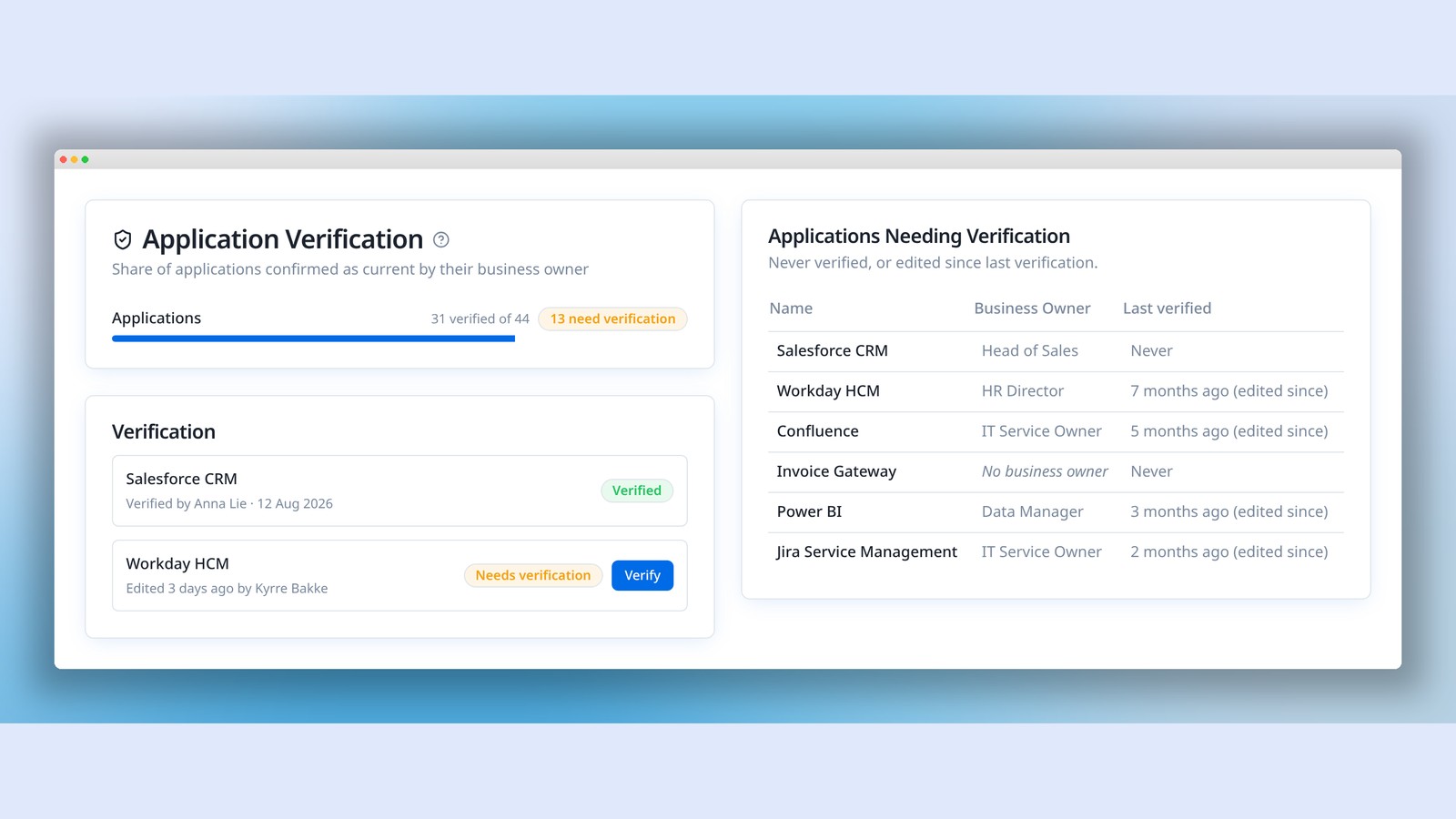
We just shipped Application Verification by Business Owner in ArchiBuddy. Every application now carries a Verification row that reads either Verified by [name] · [date], or Needs verification. The assigned Business Owner gets a Verify button when it's due, a deliberate, one-click confirmation that "yes, this is still accurate."
The important design choice is what happens next: any edit to the application resets it to Needs verification. Verification isn't a badge you earn once and keep forever, it's a live claim about the current state of the data. Change the data, and the claim expires automatically. There's no way for a stale record to keep wearing a "verified" badge it no longer deserves.
A new Application Verification scorecard on the Dashboard rolls this up: the share of applications currently confirmed, plus a drill-down of everything that's never been verified or has been edited since — with the business owner attached, so you know exactly who to nudge.
Trust stamps: provenance you don't have to ask for
Alongside verification, every core inventory item — Applications, Capabilities, Processes, Data Objects, Interfaces — now carries a lightweight audit stamp: who created it and when, who last updated it and when. These are set automatically by the database on insert and update. They can't be edited manually, and CSV imports stamp the importing user, so bulk loads don't create a blind spot.
There's also a Last updated column, hidden by default and sortable, in every inventory table, so finding your stalest data (or your freshest) is a two-click sort rather than a manual hunt.
One honest caveat: items created or edited before this release won't show a stamp. History doesn't retroactively appear, but everything from here forward is tracked.
Why this combination matters
Verification and trust stamps solve different problems, and that's the point.
- Verification is a statement of confidence from the one person qualified to make it. It's subjective, intentional, and expires the moment the underlying data changes.
- Trust stamps are a statement of fact. They don't say the data is right. They say exactly who touched it and when. No exceptions.
Together, they turn "I think this is probably still accurate" into something you can actually stand behind in a steering committee meeting: a named owner who vouched for it, and an untamperable record of who's been in there since.
This is the same pattern that makes any system of record trustworthy; version control, financial ledgers, clinical records. Accountability has to be attached to the data, not bolted on as a separate governance process nobody follows. The moment ownership becomes visible and automatic, people start trusting the repository enough to actually use it.
Both features are live now, on all plans.
ArchiBuddy is built to make your architecture repository something people actually use for decisions, not just a compliance artifact. If staleness and ownership have been quietly undermining trust in your own repository, give it a look.
Build a repository people trust
Business owners verify their applications, and every edit resets the status, so freshness is always visible.
14 days, no credit card required
Explore the live demo